- Home
- Brands
 Mercedes-Benz
- W136
- 1949 W136
Mercedes-Benz1949 Mercedes-Benz W136 Dimensions, Size & Specs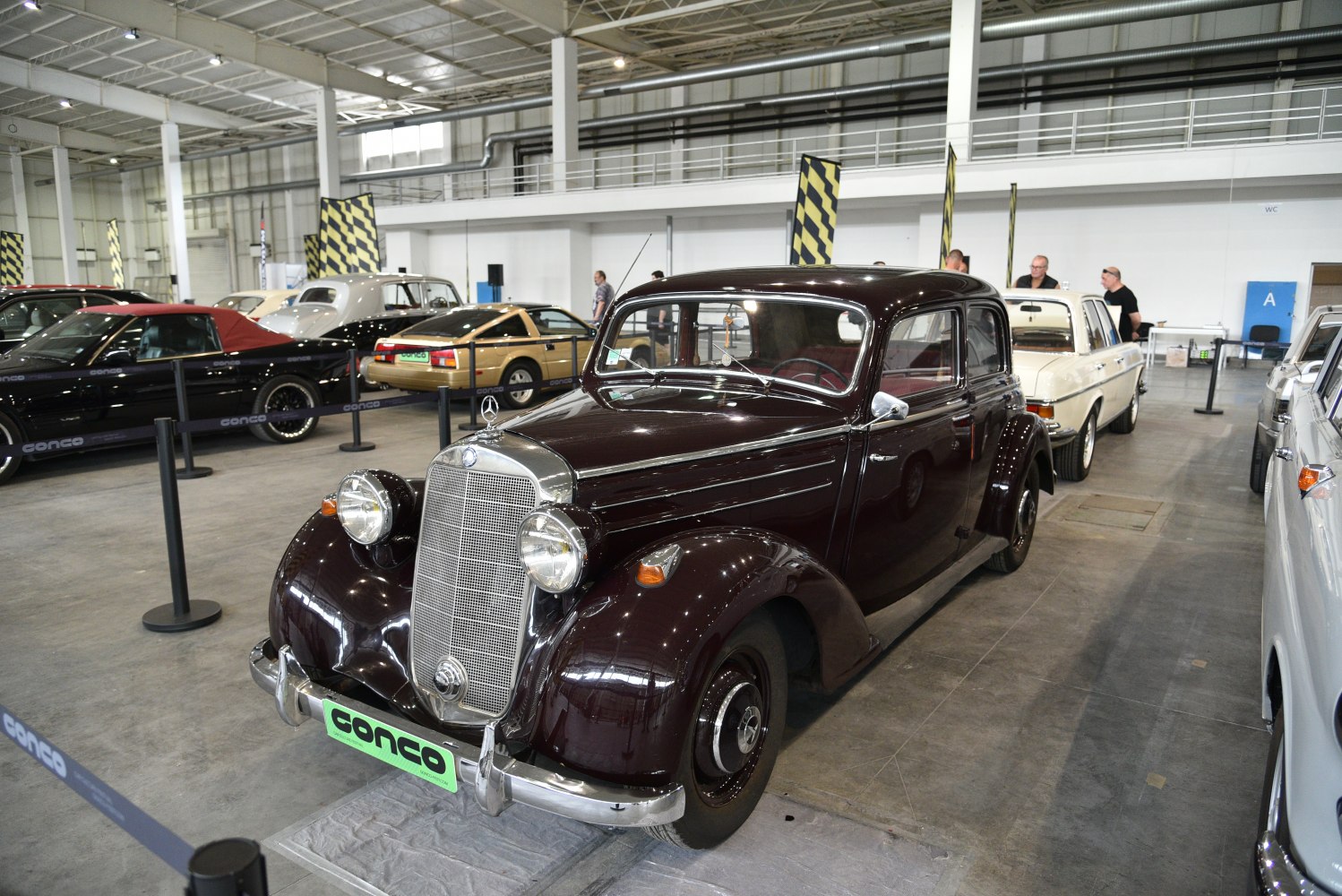
The Mercedes-Benz W136, introduced in 1949, is a classic post-war sedan that embodies the luxury and engineering prowess of Mercedes-Benz during that era. As a prominent model of its time, the W136 offered a refined balance of style, comfort, and performance. This model marked a pivotal moment in automotive history, reviving Mercedes-Benz’s reputation following World War II.
The W136 typically featured a length ranging from approximately 4,300 mm (169.3 inches) to 4,400 mm (173 inches), depending on the specific variant. Its width was about 1,710 mm (67.3 inches), with a height near 1,580 mm (62.2 inches), dimensions that give it a compact yet stately presence on the road. The vehicle’s curb weight was around 1,200 to 1,300 kg (2,645 to 2,866 lbs), reflecting robust build quality combined with the modest size typical of sedans of the period.
Under the hood, the W136 was powered by a range of inline-four engines displacing between 1.7 to 2.2 liters, delivering smooth and reliable driving experiences suitable for both urban and long-distance travel. This generation prioritized ergonomic comfort with well-appointed interiors that featured traditional craftsmanship and functional design.
The W136 sedan remains highly regarded among classic car enthusiasts and collectors for its historical significance, elegant styling, and mechanical reliability. It stands as a testament to Mercedes-Benz’s legacy in producing enduring vehicles that blend performance with sophistication. Whether viewed from a size comparison perspective or explored for its classic features, the Mercedes-Benz W136 remains an iconic representation of mid-20th-century automotive excellence.
Discover the standout features that make the 1949 Mercedes-Benz W136 a leader in its class
Have a question? Please check our knowledgebase first.
The Mercedes-Benz W136 sedan from 1949 typically measures about 4,520 mm (178 inches) in length, 1,700 mm (67 inches) in width, and around 1,590 mm (63 inches) in height. These dimensions give it a classic mid-sized sedan footprint for its era, offering a balanced combination of interior space and manageable exterior size that was suitable for urban and suburban driving in the post-war period.
With a width of approximately 1,700 mm (67 inches), the Mercedes-Benz W136 is narrower than many modern sedans, which generally range between 1,800 mm to over 1,900 mm (71 to 75 inches) wide. This narrower stance reflects the different design priorities of the late 1940s when roads were narrower and cars were designed for smaller traffic spaces.
The Mercedes-Benz W136 stands at about 1,590 mm (63 inches) tall. This modest height contributes to a relatively upright seating position and a distinct classic sedan profile. The height provides adequate headroom for passengers and lends the car a stately presence without compromising aerodynamics significantly for its time.
The W136 weighs approximately 1,200 to 1,250 kilograms (2,645 to 2,755 pounds), depending on the variant. This moderate weight for a mid-sized sedan of that era, combined with its inline-4 or inline-6 engine options, ensures balanced handling and adequate performance, though by modern standards the power-to-weight ratio might feel modest.
Though specific ground clearance figures are not extensively documented, the Mercedes-Benz W136 features typical mid-century sedan clearance suitable for the paved and often uneven roads of the late 1940s. This allowed for reliable driving in urban and rural conditions without excessive risk of underbody damage, though it’s not designed for off-road use.
Yes, the Mercedes-Benz W136's dimensions, with a length of approximately 4,520 mm (178 inches) and width of 1,700 mm (67 inches), make it compatible with standard single-car garages, which typically measure around 2,400 mm (94 inches) in width and 4,800 mm (189 inches) or more in length. Its classic sedan size is well suited for most residential garage spaces.
The W136 followed the pre-war Mercedes-Benz W143 model, featuring more modern design elements and improved engineering. Dimensionally, the W136 was slightly more streamlined with refined bodywork, though similar in overall size. The generation focused on post-war consumer needs with slightly increased comfort and mechanical reliability, while retaining classic Mercedes-Benz elegance.
Compared to contemporaries like the BMW 501 or the Opel Kapitän, the W136 was known for its engineering excellence and durability. Dimensionally, it was comparable in length and width, but often positioned with higher build quality and premium features. The W136’s powertrain options and superior ride quality helped it stand out among late 1940s mid-sized sedans.
The Mercedes-Benz W136 offers seating for up to five passengers, including the driver. Interior space was thoughtfully designed for comfort, typical of Mercedes-Benz’s reputation, with adequate headroom and legroom for its class and era. While modest by today’s standards, it provided sufficient comfort for medium-length journeys and represented a premium offering in its segment.
The W136 generation was offered with inline 4-cylinder engines initially, such as the 1.7-liter M136 unit, which produced roughly 38 to 52 horsepower depending on specification. Later variants included a 2.2-liter inline 6-cylinder engine. These engines provided robust, reliable power adequate for post-war driving, focusing on smoothness and longevity rather than outright speed.