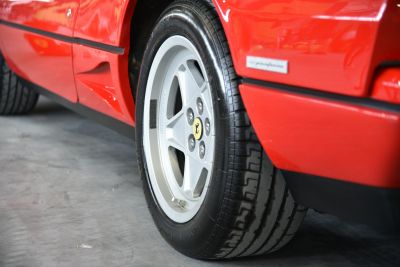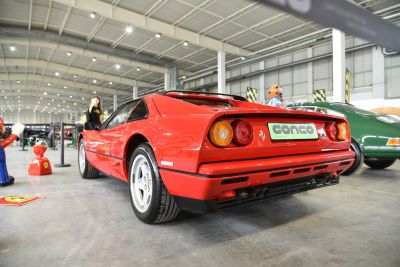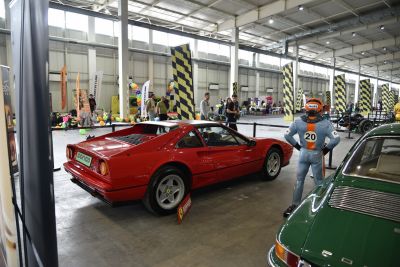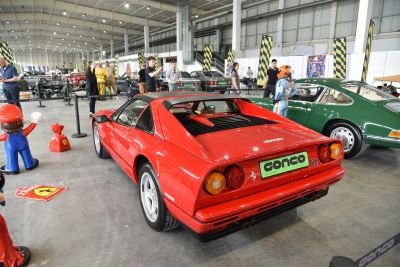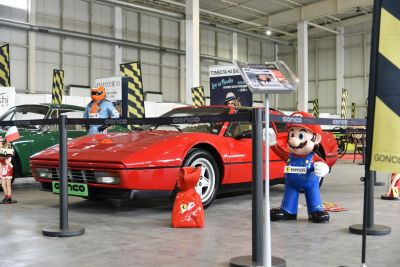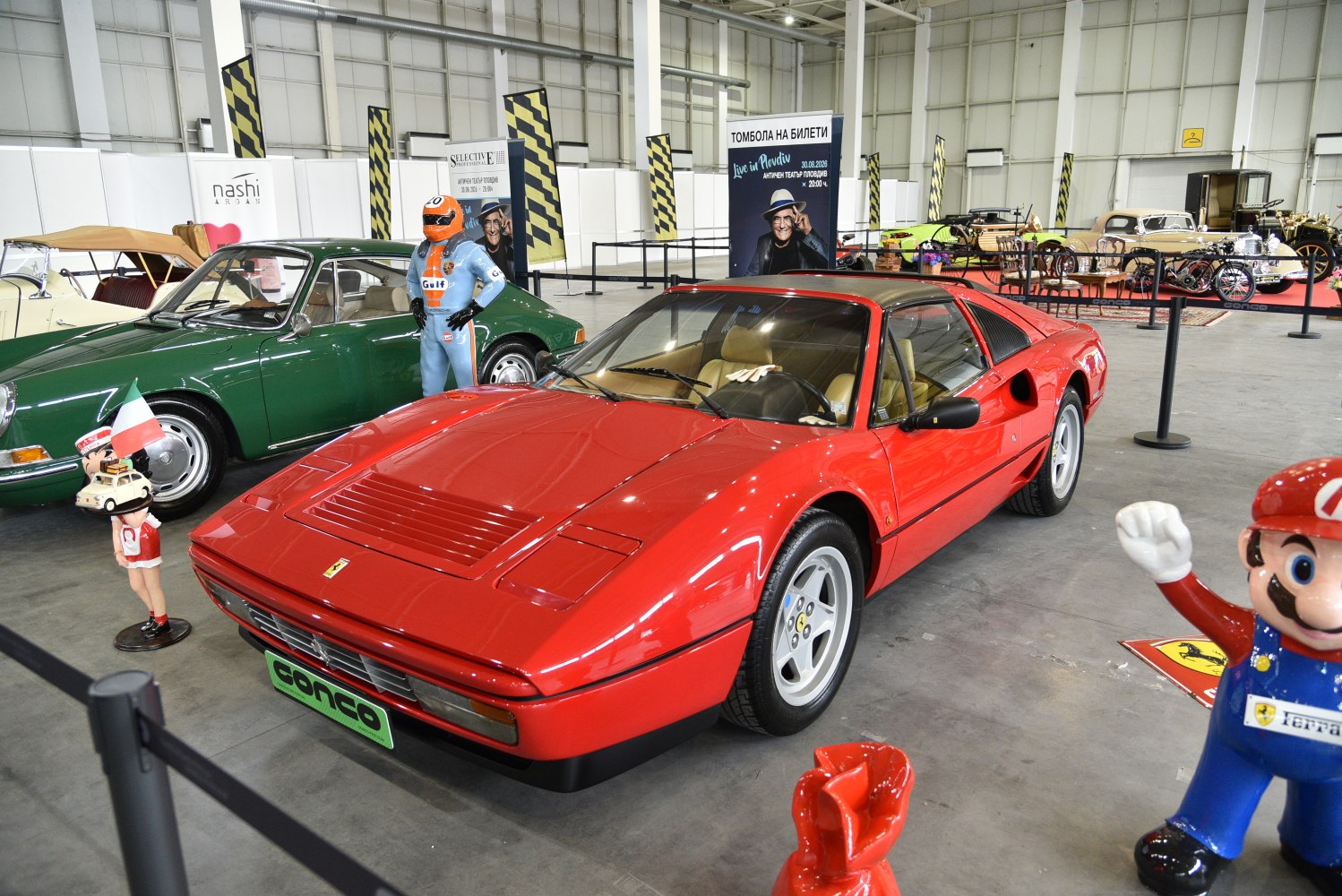
Measurements of the 1986 Ferrari GTS Turbo, engineered for optimal performance and comfort
| Dimensions | |
|---|---|
| Length: | 4255 mm167.5 in14.0 ft |
| Width: | 1730 mm68.1 in5.7 ft |
| Height: | 1128 mm44.4 in3.7 ft |
| Weight Specifications | |
| Curb Weight: | 1275 kg2811 lbs |
| Tire Specifications | |
| Rims Sizes: | 16-inch rims:
|
| Tire Sizes: |
|
The 1986 Ferrari GTS Turbo is a unique iteration in Ferrari's lineup, representing the brand's expertise in combining classic coupe design with turbocharged performance. As a coupe-type vehicle, the GTS Turbo stands out for its aggressive styling typical of the mid-1980s Italian sports cars, featuring aerodynamic bodywork that enhances both speed and handling. Though exact dimensions for this model are less commonly documented, Ferraris of this era typically featured lengths around 4.3 meters (approximately 14.1 feet), widths near 1.8 meters (5.9 feet), and heights just over 1.2 meters (around 4 feet), crafting a low-slung and road-hugging profile that allowed for nimble maneuverability and iconic presence. The turbocharged engine brought a significant boost in power and torque, making it a prized vehicle among enthusiasts who appreciate the blend of classic Ferrari craftsmanship with modern turbo technology of the time. As one of the rarer turbocharged Ferraris, the GTS Turbo represents a fascinating fusion of traditional Ferrari performance values with the turbo era's cutting-edge upgrades. Its lightweight coupe construction focused on driver engagement and aerodynamic efficiency, qualities that Ferrari has maintained throughout its storied history. This generation of Ferrari, although produced in a very limited run in 1986, leaves a lasting legacy as a distinct blend of Italian design excellence, enhanced powertrain technology, and classic sports coupe dimensions, providing a benchmark for collectible and performance-oriented vehicles from that period.
Discover the standout features that make the 1986 Ferrari GTS Turbo a leader in its class
Have a question? Please check our knowledgebase first.
The 1986 Ferrari GTS Turbo has a length of approximately 4,384 mm (172.6 inches), a width of around 1,900 mm (74.8 inches), and a height of about 1,282 mm (50.5 inches). These compact coupe dimensions contribute to its sporty and aerodynamic profile, typical of Ferrari's design language in the mid-1980s. The size supports both high performance and a relatively agile footprint, appropriate for a turbocharged grand tourer.
The curb weight of the 1986 Ferrari GTS Turbo is roughly 1,370 kg (3,020 lbs). This weight is quite competitive for a turbocharged V8 grand tourer of its time, balancing between structural rigidity and lightweight construction. The relatively moderate weight, combined with the car's turbocharged powertrain, contributes significantly to its spirited acceleration, handling agility, and overall driving dynamics.
The wheelbase of the 1986 Ferrari GTS Turbo measures approximately 2,500 mm (98.4 inches). This length creates a balance between stability at high speeds and nimble cornering ability. The wheelbase influences the vehicle's weight distribution and ride comfort, providing responsive steering characteristics, which is key to the driving experience of Ferrari’s turbocharged sports coupes.
The fuel tank capacity of the 1986 Ferrari GTS Turbo is around 100 liters (26.4 US gallons). This generous capacity allows for longer driving ranges between refueling stops, which is practical given the car's grand touring nature combined with a performance-oriented turbocharged engine.
The 1986 Ferrari GTS Turbo is designed as a two-seat coupe, providing a driver-focused cockpit typical of Ferrari models from this era. While exact interior dimension specifics aren't widely documented, the cabin focuses on ergonomics and luxury for two occupants, with minimal rear seating or cargo space, emphasizing sportiness over practicality.
Yes, the 1986 Ferrari GTS Turbo generally fits into a standard two-car residential garage. Its dimensions—length of roughly 4.38 meters (14.4 feet), width near 1.9 meters (6.2 feet), and height approximately 1.28 meters (4.2 feet)—are typical for sports coupes of its era. However, due to its width, careful parking may be necessary to ensure adequate space around the vehicle.
The 1986 Ferrari GTS Turbo succeeded the naturally aspirated 308 GTS model, maintaining a similar overall footprint but introducing significant enhancements under the hood due to turbocharging. While the body dimensions remained close—length around 4.38 meters and width approximately 1.9 meters—the introduction of the turbo V8 elevated performance with increased horsepower and torque. Weight grew slightly due to additional turbo hardware and reinforced components, but the balance of agility and speed improved markedly compared to its predecessor.
In comparison to contemporaneous turbocharged sports coupes like the Porsche 911 Turbo (930) and the Buick Grand National, the 1986 Ferrari GTS Turbo is similar in length and width but stands out with a lower height and a more aggressive wedge shape. While many competitors measured around 4.3 to 4.4 meters in length and about 1.8 to 1.9 meters in width, Ferrari's slightly larger width and lower profile aided in aerodynamics and road presence, emphasizing its exotic Italian heritage.
The relatively compact dimensions of the 1986 Ferrari GTS Turbo contribute significantly to its superb handling and on-road agility. The car's limited length (about 4.38 meters or 14.4 feet) enables easier maneuverability in urban and tight driving conditions, while the wide stance (around 1.9 meters or 6.2 feet) provides excellent stability during high-speed cornering. Low height enhances aerodynamics and the driving experience by reducing drag and the center of gravity.
Being a 1980s Ferrari coupe focused heavily on performance and driving dynamics, the 1986 GTS Turbo offers limited cargo space. With its fixed roof and two-seat layout, the trunk volume is modest—typically sufficient for small luggage or briefcases but not large suitcases or bulky items. This limited cargo capacity is common in exotic sports cars, where the emphasis is on driver experience rather than utility.
 Ferrari