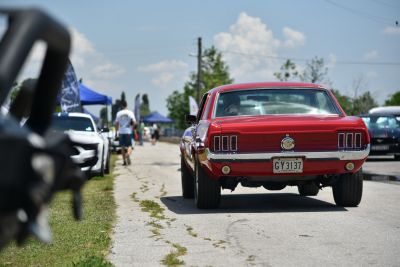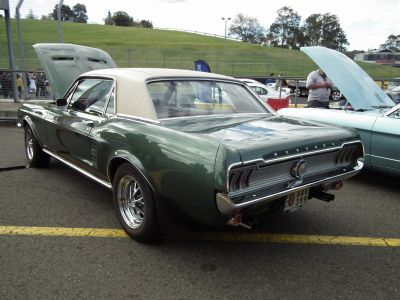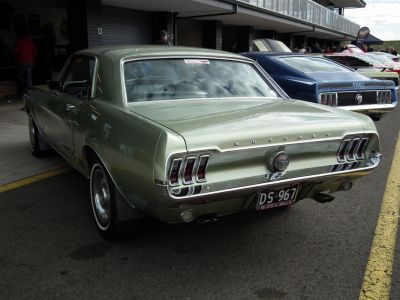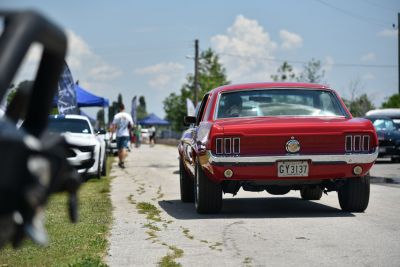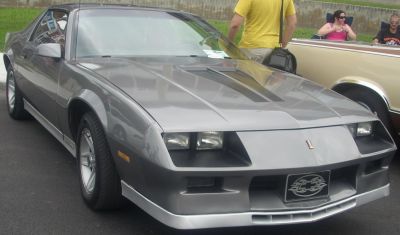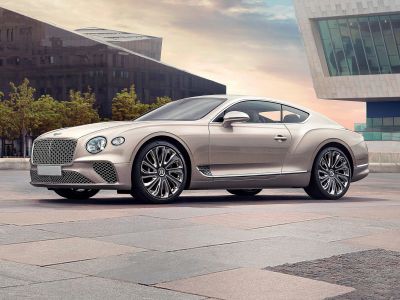
Measurements of the 1967 Ford Mustang I Hardtop, engineered for optimal performance and comfort
| Dimensions | |
|---|---|
| Length: | 4663 mm183.6 in15.3 ft |
| Width: | 1801 mm70.9 in5.9 ft |
| Height: | 1311 mm51.6 in4.3 ft |
| Trunk Capacity: | 261-263 liter9.2-9.3 cu ft |
| Weight Specifications | |
| Curb Weight: | 1222-1345 kg2694-2965 lbs |
| Tire Specifications | |
| Rims Size: | 14-inch rims:
|
| Tire Sizes: |
|
The 1967 Ford Mustang I Hardtop represents a significant iteration of the iconic Mustang lineage, hailed as a classic American muscle car. This particular generation, a facelifted version of the original Mustang I, introduced refined design elements while preserving the car’s sporty coupe essence. The Mustang I Hardtop coupe from 1967 features a compact yet striking silhouette, characterized by clean lines and a muscular stance, emphasizing its performance-oriented nature. In terms of dimensions, while exact measurements for the Mustang I Hardtop variant are less commonly cited compared to later Mustang generations, the car generally maintained a length close to 3800 mm (approximately 149.6 inches), a slim width suited for agile handling, and a height around 1300 mm (about 51.2 inches), resulting in a low center of gravity and an aggressive presence on the road. The hardtop design provided a sleek roofline that enhanced aerodynamics and driver visibility. Inside, the coupe accommodated a driver-focused cockpit layout with essential instrumentation, blending style with functionality. The 1967 facelift also brought subtle exterior and mechanical tweaks to elevate performance and comfort. This Mustang generation holds a cherished place among enthusiasts due to its pioneering role in the muscle car era, combining compact size with robust engine capabilities. Overall, the 1967 Ford Mustang I Hardtop coupe remains an emblematic vehicle, balancing classic American design with enhanced dynamics suitable for both collectors and muscle car aficionados.
Discover the standout features that make the 1967 Ford Mustang I Hardtop a leader in its class
Have a question? Please check our knowledgebase first.
The 1967 Ford Mustang I Hardtop (facelift 1966) measures approximately 4524 mm (178.1 inches) in length, 1727 mm (68 inches) in width, and 1334 mm (52.5 inches) in height. These dimensions give the Mustang a compact and sporty profile typical of muscle cars from that era, balancing a relatively long hood with a short rear deck. The width allows enough interior space for two passengers, while the height contributes to the car's low-slung stance, enhancing its aerodynamic appearance and sporty handling.
The curb weight of the 1967 Ford Mustang I Hardtop is approximately 1370 kg (around 3020 pounds). This moderate weight was achieved through the use of a compact, lightweight chassis combined with a powerful engine, allowing the car to maintain a good balance between agility and straight-line speed. This weight helps the Mustang deliver strong acceleration and responsive handling, which is characteristic of first-generation muscle cars. It is neither too heavy to feel sluggish nor too light to compromise stability, making it well-suited for spirited driving.
The wheelbase of the 1967 Ford Mustang I Hardtop is 2683 mm (105.6 inches). A wheelbase of this length contributes to a stable ride by providing sufficient distance between the front and rear wheels to absorb road imperfections, which enhances ride comfort on highways and city streets. Additionally, this wheelbase length is short enough to allow for responsive and nimble handling, enabling the Mustang to quickly change direction during spirited driving. The balance between stability and agility is a key characteristic of the Mustang's driving dynamics.
The 1967 Mustang I Hardtop, being a compact coupe, offers modest interior space focused primarily on the driver and one passenger. Legroom and headroom are adequate for average-sized adults, with front legroom approximately 1020 mm (40.2 inches) and headroom around 965 mm (38 inches). Given its two-door coupe design optimized for a sporty aesthetic, rear seating is either very limited or not available, with the hardtop mainly accommodating front passengers. Interior space was designed with performance and style in mind rather than maximum passenger comfort.
The 1967 Ford Mustang I Hardtop typically came with a fuel tank capacity of about 61 liters (16 gallons). Depending on the engine variation and driving conditions, the car's fuel consumption could range approximately between 12 to 15 liters per 100 kilometers (19.6 to 15.7 mpg US), translating to an average driving range of around 400 to 510 kilometers (250 to 315 miles) on a full tank. Although not highly fuel-efficient by modern standards, this capacity was typical for American muscle cars of the era, balancing performance needs with practical daily driving distances.
The 1967 Ford Mustang I Hardtop fits comfortably into a standard residential garage. Standard garage dimensions are roughly 2.4 to 2.7 meters (8 to 9 feet) wide and about 5.5 to 6 meters (18 to 20 feet) deep. With a width of 1.727 meters (68 inches) and a length of 4.524 meters (178.1 inches), the Mustang takes up less lateral and longitudinal space than the typical garage size, leaving enough room to open doors and maneuver around the vehicle for maintenance or storage. Its height of 1.334 meters (52.5 inches) poses no challenges for overhead clearance.
The 1967 Mustang I Hardtop, part of the facelifted first-generation Mustangs, is notably larger and more aggressive-looking than the 1965-1966 predecessors. Dimensionally, it is slightly longer and wider: the 1967 model's length increased by around 127 mm (5 inches) to 4.524 meters (178.1 inches) and its width to 1.727 meters (68 inches), compared to earlier models at about 4.4 meters (173 inches) length and 1.68 meters (66.25 inches) width. These changes gave the car a more muscular stance. The 1967 model also featured redesigned front and rear styling with quad headlights and a more pronounced grille, offering a bolder, refined appearance compared to the simpler earlier Mustang look.
The 1967 Ford Mustang I Hardtop compares closely in size to its muscle car competitors like the Chevrolet Camaro and Pontiac Firebird. The Mustang is about 4.524 meters (178.1 inches) long, slightly longer than the Camaro (around 4.55 meters or 179 inches) and the Firebird (approximately 4.54 meters or 179 inches). Width-wise, the Mustang is narrower at 1.727 meters (68 inches) compared to the Camaro and Firebird, which are typically around 1.85 meters (73 inches) wide. The Mustang’s relatively compact width contributes to nimble handling, while its length and lower height provide an aggressive, sporty stance similar to its competitors. Overall, the Mustang balances dimensions to be competitive but with a distinctive Ford design.
The 1967 Mustang I Hardtop is emblematic of the first-generation Mustangs, characterized by its stylish yet simple fastback coupe body style with clean lines and a relatively lightweight build. It introduced quad headlights and a more prominent grille compared to earlier models, alongside minor chassis and suspension upgrades to improve handling and ride quality. Performance-wise, it featured V8 engine options up to 289 cubic inches, delivering solid muscle car power. Later generations became larger and heavier with more modern styling and technology, while the 1967 model maintains a classic, vintage appeal prized for its balance of style and performance.
The 1967 Mustang I Hardtop offers a moderate trunk space typical for a compact coupe of its time, with a capacity of approximately 340 liters (12 cubic feet). This space is suitable for everyday luggage, groceries, or smaller items, but limited compared to modern vehicles or larger muscle cars with bigger trunks. The Mustang's design prioritizes sporty aesthetics and passenger space over cargo capacity, so while the trunk can handle light to moderate loads, it may not be ideal for very large or bulky cargo. This limitation reflected the car's focus on performance and style rather than utility.

 Ford
Ford